

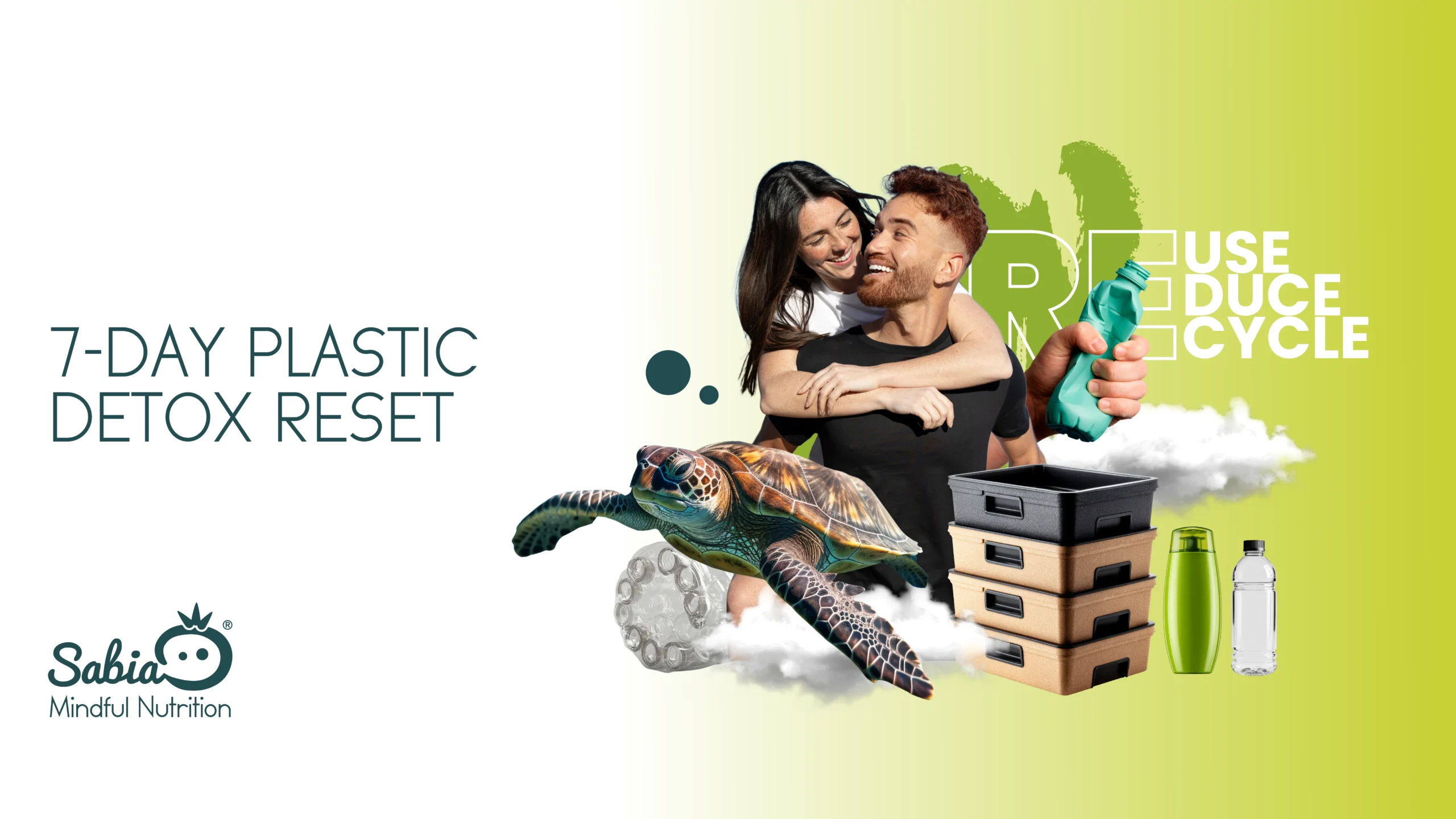
7-Day Plastic Detox Reset
How to Reduce Daily Toxin Exposure and Support Hormonal Balance
In the modern world, eliminating plastic exposure entirely is not realistic. However, what is possible, and incredibly powerful, is reducing your daily exposure to its most harmful sources. Microplastics and endocrine disruptors, such as BPA and phthalates, have been linked to inflammation, hormonal imbalances, and metabolic dysfunction.
This 7-day reset is designed with a single, powerful goal in mind: lower your toxic load and support your body’s natural detoxification systems.
🥤 Day 1 – Your Water, Your Foundation
Hydration is one of the most common sources of plastic exposure.
Action Steps
• Replace plastic bottles with glass or stainless steel
• Start drinking filtered water
• Avoid leaving plastic bottles in heat or sunlight
Sabia Tip
Add fresh lemon or cucumber to your water for gentle, daily detox support.
🍱 Day 2 – Clean Kitchen Habits
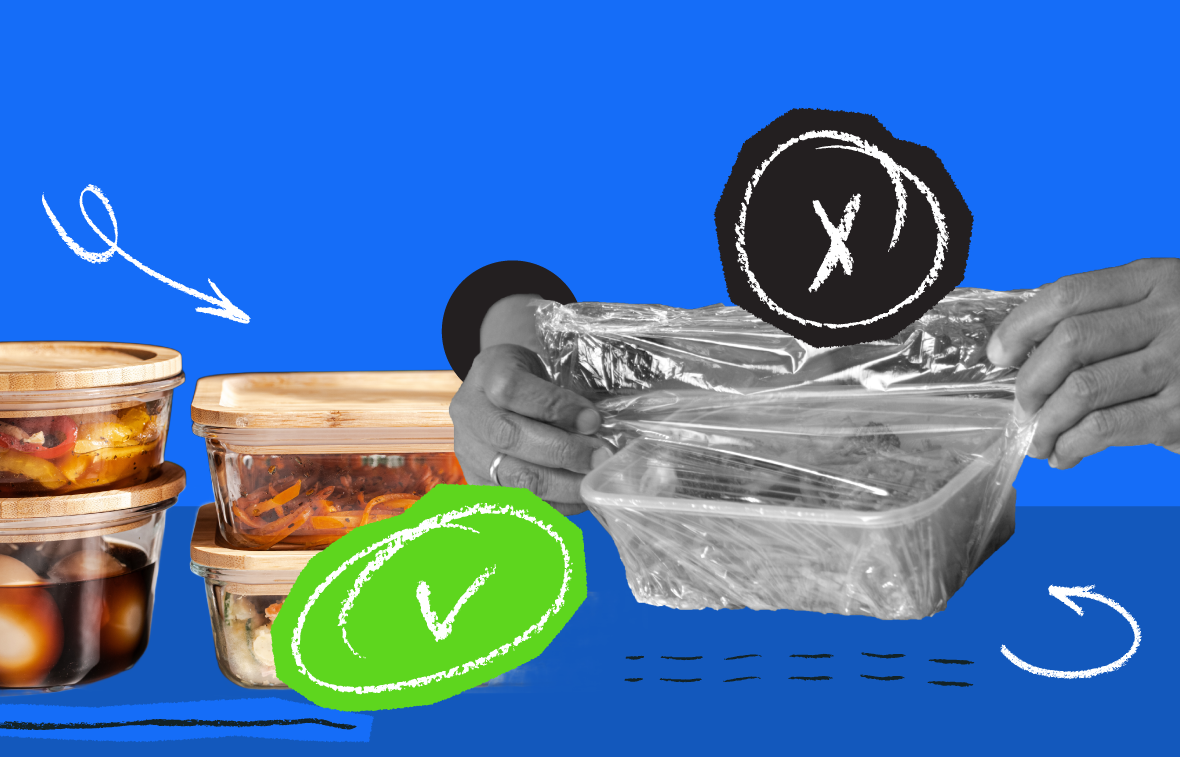
When heat meets plastic, harmful chemicals leach into your food.
Action Steps
• Never microwave food in plastic
• Replace at least 2-3 plastic containers with glass alternatives
• Choose wooden or bamboo cutting boards over plastic
Key Insight
Even “BPA-free” plastics can still release harmful compounds when heated.
🧴 Day 3 – Clean Beauty Upgrade
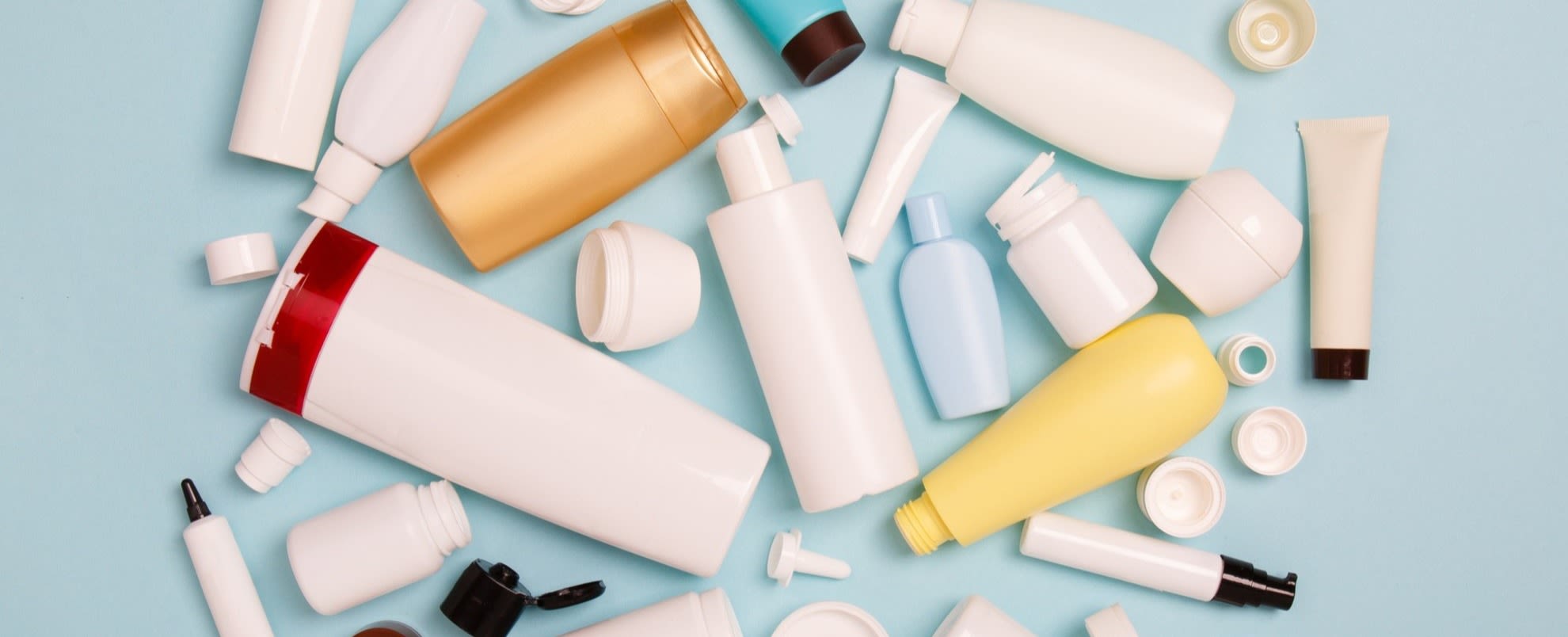
Many personal care products contain hidden microplastics that contribute to your toxic load.
Avoid Ingredients Like
• Polyethylene (PE)
• Polypropylene (PP)
• Acrylates
Action Steps
• Switch to at least one clean beauty product
• Opt for glass, aluminum, or refillable packaging options
Sabia Philosophy
Less is more — simplifying your beauty routine reduces your exposure to harmful chemicals.
🛍️ Day 4 – Conscious Shopping
Packaging matters more than you might think.
Action Steps
• Bring reusable bags to the store
• Choose products with minimal or plastic-free packaging
• Whenever possible, buy fresh, unpackaged foods
Wellness Insight
Whole foods = less plastic, more nutrition.
🏠 Day 5 – Your Home Environment
Microplastics are also found in household dust, subtly affecting your health.
Action Steps
• Ventilate your home daily (10-15 minutes)
• Use a vacuum with a HEPA filter to capture fine dust
• Reduce synthetic materials in your living space
👕 Day 6 – What You Wear Matters
Synthetic fabrics shed microplastics into your environment — and potentially your body.
Action Steps
• Identify polyester, nylon, and acrylic clothing
• Prioritize natural fibers like cotton, linen, and wool
Practical Tip
No need to replace everything — simply make more mindful choices for future purchases.
🍽️ Day 7 – Anti-Inflammatory Reset
Food is your most powerful detox tool.
Action Steps
• Eat 100% whole, unprocessed foods
• Increase your fiber intake to support toxin elimination
• Focus on antioxidant-rich meals to fight inflammation
Sample Day
• Breakfast: Plain yogurt with fresh berries
• Lunch: Grilled salmon with roasted vegetables and olive oil
• Dinner: Large salad with clean protein (e.g., chicken, quinoa, or chickpeas)
✨ What to Expect After 7 Days
• Reduced bloating and inflammation
• Improved digestion
• More stable energy levels
• Lower exposure to hormone-disrupting chemicals
🌱 Final Thoughts
There is no quick “detox” that can rid the body of microplastics overnight. True wellness comes from consistent, intentional daily choices that align with long-term health optimization.
This reset isn’t about perfection; it’s about progress, awareness, and nurturing your body toward a healthier, more balanced future.
References
- Plastic and Human Health: A Microplastic Problem
- Published by Environmental Science and Technology, 2020.
- Link: https://pubs.acs.org/doi/full/10.1021/acs.est.0c00652
- Endocrine Disruptors and Metabolic Diseases: A Review of the Evidence
- Published by Frontiers in Endocrinology, 2019.
- Link: https://www.frontiersin.org/articles/10.3389/fendo.2019.00162/full
- The Role of Diet in Detoxification and Reducing Toxic Exposure
- Published by Journal of Nutritional Health and Food Engineering, 2021.
- Link: https://www.journals.elsevier.com/journal-of-nutritional-health-and-food-engineering
