

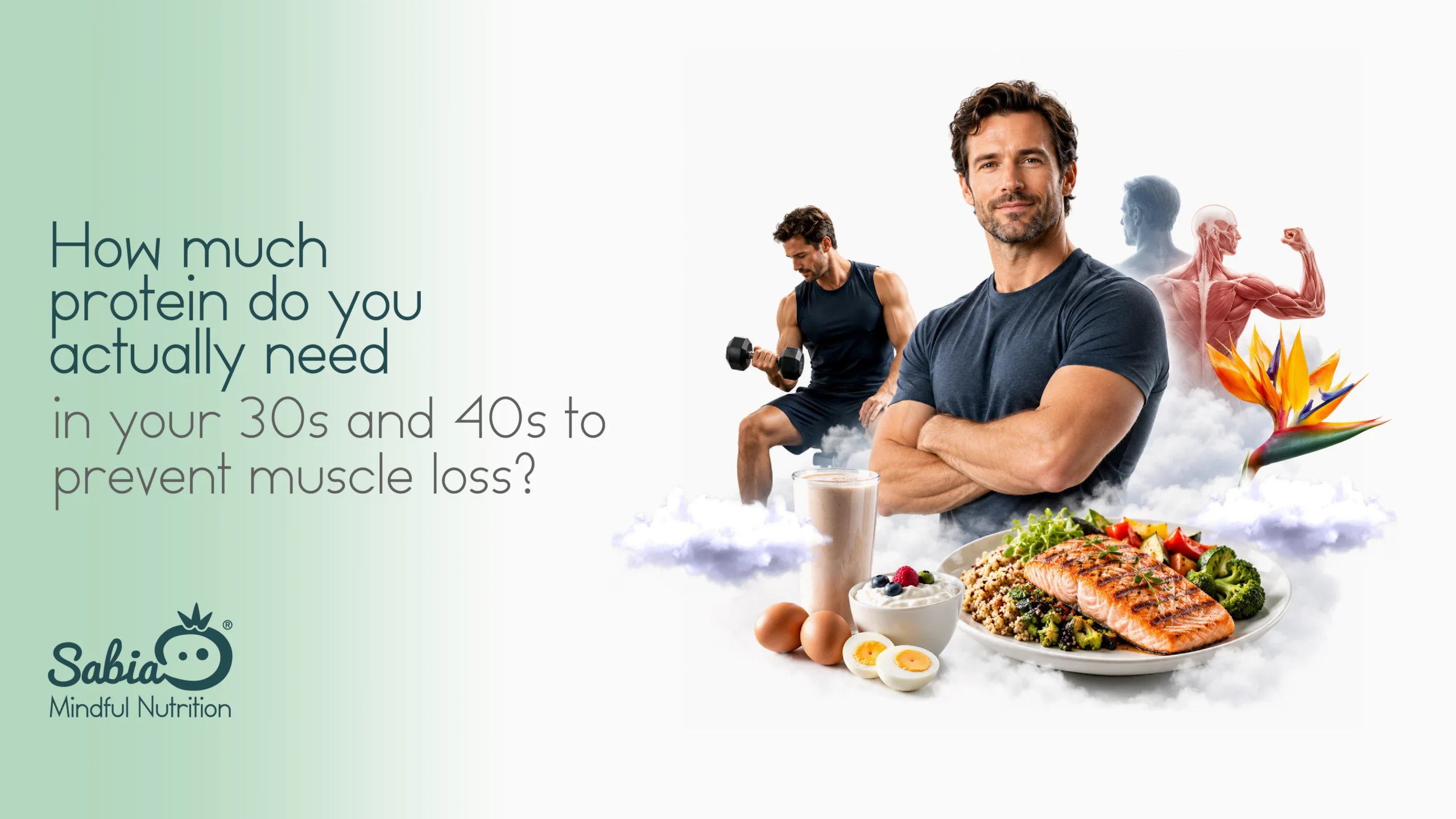
How Much Protein Do You Actually Need in Your 30s and 40s to Prevent Muscle Loss?
Quick Answer: How Much Protein Do You Need?
- Minimum baseline: 0.8 g/kg/day
- Better muscle maintenance target: 1.2 g/kg/day
- Active adults or strength training target: 1.4–1.6 g/kg/day
- Per meal goal: 25–40 g of protein
- Best structure: 3 high-protein meals, plus a snack if needed
This answer surprises many people because they think protein is only important for athletes, bodybuilders, or people trying to “bulk.” In reality, protein becomes increasingly important in your 30s and 40s because this is when many adults start losing muscle slowly without noticing.
Why Protein Matters More in Your 30s and 40s
Your 30s and 40s are often the decades when life gets more demanding. Career pressure increases. Desk time increases. Stress rises. Sleep often gets shorter. Workouts become less consistent. Meals become more rushed. And even if your weight does not change dramatically, your body composition can begin to shift.
This means you may slowly lose muscle and gain fat at the same time. The scale might not show a dramatic change, but your strength, posture, energy, metabolism, and recovery can begin to decline.
Muscle is not just about appearance. Skeletal muscle supports:
- Metabolism and daily energy expenditure
- Blood sugar regulation
- Joint stability and posture
- Strength and mobility
- Injury prevention
- Healthy aging
- Recovery from training and daily stress
Protein provides amino acids, which are the building blocks your body uses to repair and maintain muscle tissue. Without enough protein, especially when paired with low activity and poor sleep, the body has fewer resources to preserve lean mass.
This is why protein is not a trend. It is a foundation.
What About Your 50s and 60s?
If you are in your 50s or 60s, protein matters even more. As we age, the body becomes less efficient at using protein to build and maintain muscle, which means each meal needs to work a little harder. This is why many adults in this stage benefit from aiming toward the higher end of the range, around 1.4–1.6 g/kg/day, especially when paired with strength training. Think of protein as part of your longevity strategy: it helps support strength, mobility, recovery, and independence. The key is to spread it across the day with meals that include around 30–40 grams of protein, instead of saving most of it for dinner.
The Formula: How to Calculate Your Protein Needs
The easiest way to calculate your protein target is to use your body weight in kilograms.
Formula:
Body weight in kg × 1.2–1.6 = daily protein target in grams
If you know your weight in pounds, divide it by 2.2 to convert it to kilograms.
Example:
A 160-pound person weighs about 73 kg.
- 73 × 1.2 = 88 g protein/day
- 73 × 1.6 = 117 g protein/day
So a realistic protein target for that person would be around 90–120 grams per day, depending on activity level and goals.
Protein Target by Body Weight
| Body Weight | Weight in kg | 1.2 g/kg/day | 1.6 g/kg/day |
|---|---|---|---|
| 120 lb | 54 kg | 65 g/day | 87 g/day |
| 140 lb | 64 kg | 77 g/day | 102 g/day |
| 160 lb | 73 kg | 88 g/day | 117 g/day |
| 180 lb | 82 kg | 98 g/day | 131 g/day |
| 200 lb | 91 kg | 109 g/day | 145 g/day |
| 220 lb | 100 kg | 120 g/day | 160 g/day |
If someone has obesity or is actively losing weight, using actual body weight may overestimate protein needs. In that case, a registered dietitian may use adjusted body weight, goal body weight, or lean mass to create a more accurate target.
Why 25–40 Grams Per Meal Works Better Than Saving It All for Dinner
Many adults eat very little protein at breakfast, moderate protein at lunch, and most of their protein at dinner. This pattern is common, but it may not be ideal for muscle maintenance.
Your body responds to protein meals through a process called muscle protein synthesis. This is the process of repairing and building muscle proteins. Research on protein distribution suggests that adults may benefit from spreading protein across the day instead of concentrating most of it in one meal.
A practical goal is to aim for 25–40 grams of protein per meal. For many people, that means:
- Breakfast: 25–35 g
- Lunch: 30–40 g
- Dinner: 30–40 g
- Optional snack: 15–25 g
This structure helps you reach your daily target without forcing one oversized dinner. It also supports better satiety, steadier energy, and fewer late-night cravings.
Recent research on protein distribution notes that meals containing about 30–35 grams of high-quality protein can provide enough leucine to stimulate muscle protein synthesis, and that multiple protein-rich meals may better support muscle mass than a low-protein breakfast followed by a large dinner. :contentReference[oaicite:2]{index=2}
What Does 30 Grams of Protein Look Like?

One of the biggest problems with protein advice is that people hear a number but do not know what it looks like on a plate. Here are simple examples of roughly 25–40 grams of protein:
- 5–6 oz cooked chicken breast: about 35–45 g protein
- 5 oz cooked salmon: about 30–35 g protein
- 1 cup Greek yogurt plus chia seeds: about 25–30 g protein
- 3 eggs plus cottage cheese: about 30–35 g protein
- 1 scoop protein powder blended with milk: about 25–35 g protein
- 1 cup tofu plus edamame: about 30–35 g protein
- Lentil bowl with quinoa and Greek yogurt sauce: about 25–35 g protein
- Turkey wrap with extra turkey and Greek yogurt dip: about 30–40 g protein
You do not need to eat the same protein source every day. In fact, variety is better. Rotate fish, eggs, poultry, dairy, legumes, tofu, tempeh, seafood, lean meats, seeds, and high-protein grains.
Best Protein Sources for Adults in Their 30s and 40s
The source of protein matters. Harvard’s Nutrition Source emphasizes that protein quality is not just about grams. It is also about the “protein package,” meaning what comes with the protein: saturated fat, fiber, sodium, vitamins, minerals, and overall food quality.
Animal-Based Protein Options
- Eggs
- Greek yogurt
- Cottage cheese
- Chicken
- Turkey
- Salmon
- Sardines
- Tuna
- Lean beef in moderation
- Shrimp and seafood
Plant-Based Protein Options
- Tofu
- Tempeh
- Edamame
- Lentils
- Beans
- Chickpeas
- Quinoa
- Pea protein
- Hemp seeds
- Chia seeds
- Nuts and nut butters
Plant-based meals can absolutely support muscle maintenance, but they often require more planning because some plant proteins are lower in certain essential amino acids. The solution is not complicated: eat a variety of plant proteins throughout the day and make sure each meal has enough total protein.
Protein Alone Is Not Enough: Strength Training Is the Real Signal
Here is the part many people miss: protein helps preserve and repair muscle, but strength training tells your body to keep it.
If you eat more protein but never challenge your muscles, you are missing the most important signal. Resistance training creates the stimulus. Protein provides the building blocks. Sleep and recovery allow adaptation.
For adults in their 30s and 40s, the sweet spot is usually:
- 2–4 strength training sessions per week
- Daily walking or regular movement
- Protein at each meal
- 7–9 hours of sleep when possible
- Enough total calories to support recovery
You do not need extreme workouts. Start with basic movements:
- Squats or chair squats
- Deadlifts or hip hinges
- Push-ups or chest presses
- Rows
- Lunges
- Step-ups
- Planks or dead bugs

Protein Timing for Desk Workers
If you work a desk job, your protein strategy should solve three problems: low-movement days, energy crashes, and rushed meals.
Here is a simple protein schedule:
Breakfast: 25–35 g Protein
Most people under-eat protein in the morning. A higher-protein breakfast can improve satiety and reduce the urge to snack all morning.
Examples:
- Greek yogurt, berries, chia seeds, and nuts
- Eggs with avocado and whole-grain toast
- Protein smoothie with Greek yogurt, berries, and spinach
- Tofu scramble with vegetables
Lunch: 30–40 g Protein
Lunch should keep you energized, not sleepy. Combine protein with fiber and healthy fats.
Examples:
- Salmon bowl with quinoa, greens, avocado, and olive oil
- Chicken salad with beans and roasted vegetables
- Turkey wrap with Greek yogurt sauce
- Tofu bowl with edamame and brown rice
Dinner: 30–40 g Protein
Dinner should help recovery without becoming the only protein-heavy meal of the day.
Examples:
- Lean beef or turkey with sweet potato and vegetables
- Fish tacos with cabbage slaw and avocado
- Lentil pasta with vegetables and parmesan
- Chicken, rice, and roasted broccoli
Optional Snack: 15–25 g Protein
If your target is over 100 grams per day, a snack can make it easier.
Examples:
- Cottage cheese with fruit
- Protein shake
- Greek yogurt
- Boiled eggs
- Edamame
- Tuna or salmon snack pack
Common Protein Mistakes in Your 30s and 40s
1. Eating Almost No Protein at Breakfast
Coffee and toast may be convenient, but they do not provide enough amino acids to support muscle maintenance. Breakfast is one of the easiest places to upgrade.
2. Thinking More Protein Automatically Means More Muscle
Protein helps, but muscle maintenance also requires strength training, sleep, calories, and recovery.
3. Ignoring Fiber
A high-protein diet with low fiber is not ideal. Include vegetables, fruit, beans, oats, lentils, seeds, and whole grains.
4. Relying Only on Protein Bars
Protein bars can be convenient, but they should not replace real meals most of the time. Many are closer to candy bars with protein added.
5. Forgetting Hydration
Protein metabolism requires proper hydration. Drink water consistently throughout the day.
6. Going Too Low-Calorie
If you are eating too little overall, your body may struggle to preserve muscle, even with higher protein intake. This is especially important during weight loss.
Is Too Much Protein Dangerous?
For most healthy adults, moderate higher-protein diets are generally well tolerated, especially when protein comes from high-quality foods and is paired with vegetables, fiber, hydration, and regular movement.
However, more is not always better. Extremely high protein intake is not necessary for most people and may crowd out other important nutrients if it replaces fruits, vegetables, legumes, and whole grains.
People with kidney disease, advanced liver disease, certain metabolic conditions, or medical nutrition restrictions should speak with a healthcare provider or registered dietitian before increasing protein intake.
The goal is not to eat protein at all costs. The goal is to eat enough protein within a balanced, sustainable diet.
Simple 1-Day High-Protein Meal Plan
Here is a realistic day that lands around 100–120 grams of protein without feeling extreme.
Breakfast: Greek Yogurt Power Bowl
- 1 cup Greek yogurt
- Berries
- Chia seeds
- Almonds
Approximate protein: 30 g
Lunch: Salmon Quinoa Bowl
- 5 oz salmon
- Quinoa
- Spinach
- Avocado
- Olive oil lemon dressing
Approximate protein: 35–40 g
Snack: Cottage Cheese with Fruit
- Cottage cheese
- Blueberries or pineapple
- Cinnamon
Approximate protein: 18–25 g
Dinner: Chicken, Sweet Potato, and Vegetables
- 5 oz chicken breast or tofu alternative
- Sweet potato
- Roasted broccoli
- Olive oil
Approximate protein: 35–45 g
Total: approximately 115–135 g protein, depending on portions.
The Simple Protein Formula for Your 30s and 40s
Adults in their 30s and 40s generally need about 1.2–1.6 grams of protein per kilogram of body weight per day to help prevent muscle loss and support strength, especially if they are active or strength training. For most people, this means 80–130 grams daily, spread across 3 meals with 25–40 grams of protein each.
References
- Stanford Medicine. How much protein should we really be eating?
- Harvard T.H. Chan School of Public Health. Protein.
- UC Davis Nutrition Department. Perspectives on the 2025–2030 Dietary Guidelines for Americans.
- Frontiers in Nutrition. Impacts of protein quantity and distribution on body composition.
