

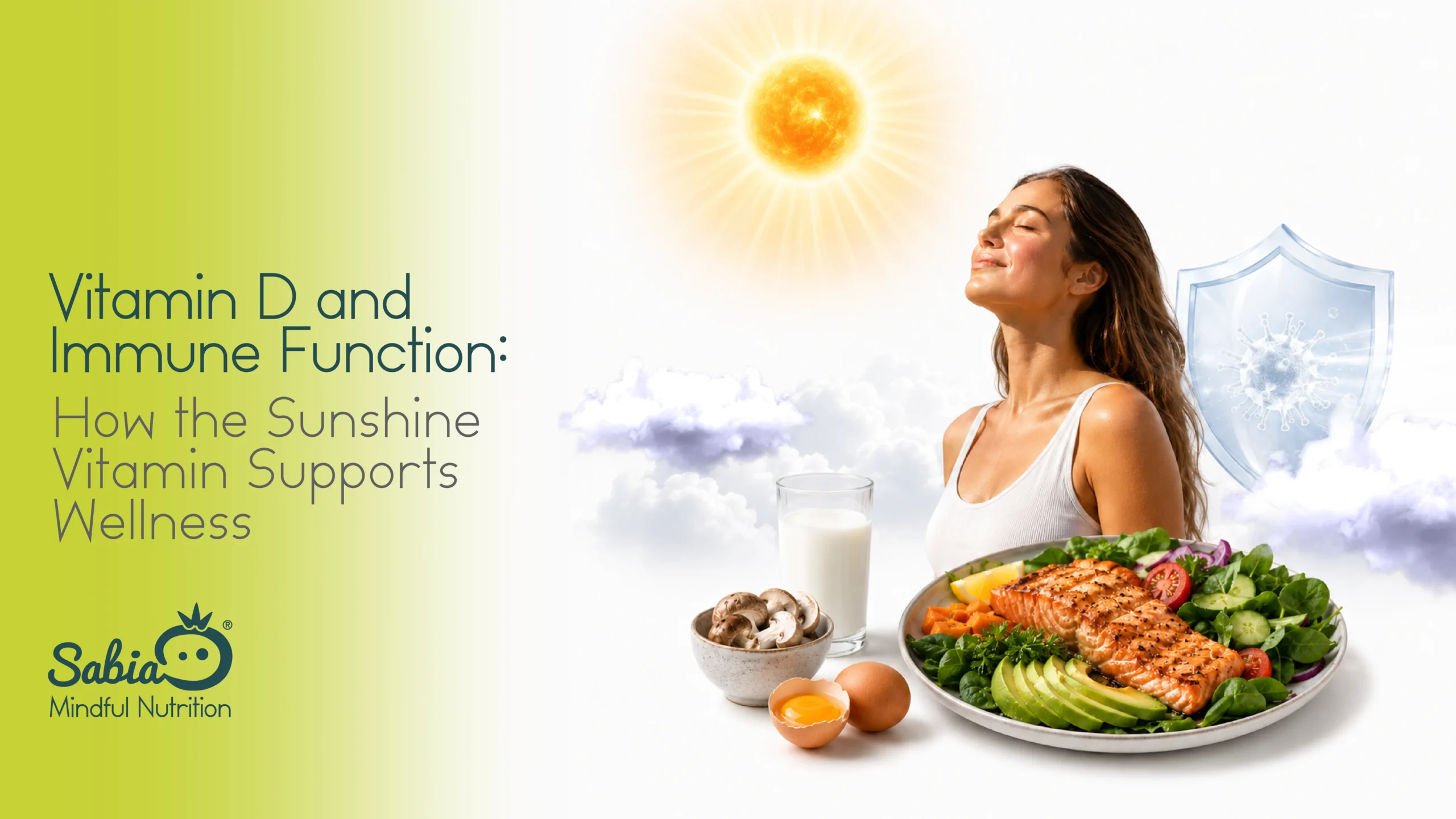
Vitamin D and Immune Function: How the Sunshine Vitamin Supports Wellness
At Sabia Nutrition, we believe immune health should be approached through consistent daily habits, not fear-based trends. Vitamin D fits perfectly into that philosophy. It can be supported through sunlight exposure, vitamin D-rich foods, fortified foods, and supplementation when appropriate.
In this guide, we’ll explain what vitamin D does, how it supports immune function, who may be at risk of low levels, what foods contain vitamin D, and how to approach supplementation safely.
What Is Vitamin D?
Vitamin D is a fat-soluble vitamin, meaning it dissolves in fat and can be stored in the body. Unlike many vitamins, vitamin D acts more like a hormone after it is activated. Your body first converts vitamin D in the liver, then again in the kidneys, turning it into its active form.
The two main forms are:
- Vitamin D2: Found in some plant sources and fortified foods.
- Vitamin D3: Produced in the skin through sunlight exposure and found in animal-based foods like fatty fish and egg yolks.
Vitamin D helps the body absorb calcium and phosphorus, which are essential for bones and teeth. But vitamin D receptors are also found in many tissues, including immune cells. That is why researchers have studied vitamin D’s role in immune regulation, inflammation, and respiratory health.

How Vitamin D Supports Immune Function
The immune system has two major branches: innate immunity and adaptive immunity.
Innate immunity is your body’s first line of defense. It responds quickly to potential threats. Adaptive immunity is more specialized and helps your body remember specific pathogens over time.
Vitamin D is involved in both systems. Research shows that vitamin D can influence immune cell activity, support antimicrobial responses, and help regulate inflammation. In simple terms, vitamin D helps the immune system respond without becoming overactive.
This balance matters. A healthy immune system is not one that is constantly “boosted.” It is one that responds appropriately. Too weak of a response can leave the body vulnerable. Too much inflammation can create other problems. Vitamin D appears to help with that immune balance.
Studies have also explored vitamin D supplementation and respiratory infections. A 2021 meta-analysis in The Lancet Diabetes & Endocrinology found a small protective effect of vitamin D supplementation against acute respiratory infections, especially in certain dosing patterns, but later analyses have shown mixed results. The takeaway is practical: correcting low vitamin D status may support health, but vitamin D should not be treated as a guaranteed way to prevent illness.
Vitamin D and Inflammation Balance
Inflammation is part of the immune response. When you get injured or exposed to a pathogen, inflammation helps the body respond. But chronic inflammation — the kind that stays elevated over time — can negatively affect energy, metabolism, cardiovascular health, and overall wellness.
Vitamin D is involved in inflammatory signaling. Adequate vitamin D status may help the body maintain a healthier inflammatory balance. This is one reason vitamin D is often discussed in relation to immune health, autoimmune conditions, and metabolic wellness.
However, it is important to be careful with claims. Vitamin D is not a treatment for autoimmune disease or chronic inflammation by itself. If someone has a diagnosed condition, supplementation should be guided by a healthcare professional.
From a lifestyle perspective, vitamin D works best as part of a bigger foundation: anti-inflammatory meals, quality sleep, stress management, movement, hydration, and reduced intake of ultra-processed foods.
Signs You Might Have Low Vitamin D
Low vitamin D can be common, especially in people with limited sun exposure. Some signs may include fatigue, muscle weakness, bone discomfort, low mood, or frequent illness, but these symptoms are not specific. Many conditions can cause similar symptoms, so the only reliable way to know your vitamin D status is through a blood test ordered by a healthcare provider.
Groups at higher risk of low vitamin D may include:
- People who spend most of their time indoors.
- People who consistently cover most of their skin outdoors.
- People with darker skin, because more melanin can reduce vitamin D production from sunlight.
- Older adults.
- People with certain digestive conditions that affect fat absorption.
- People with obesity, since vitamin D can be sequestered in body fat.
- People who avoid fish, dairy, eggs, and fortified foods.
If you suspect low vitamin D, do not guess with high-dose supplements. Testing first is the smarter approach.
Best Food Sources of Vitamin D
Vitamin D is naturally found in relatively few foods, which is why sunlight and fortified foods are important sources for many people. Still, nutrition can help.

1. Fatty Fish
Salmon, sardines, trout, tuna, and mackerel are among the best natural food sources of vitamin D. They also provide omega-3 fatty acids, which support heart health and inflammation balance.
2. Egg Yolks
Egg yolks contain small amounts of vitamin D, along with choline, protein, and healthy fats. Eggs can be a practical breakfast option when paired with vegetables and whole grains.
3. Fortified Dairy and Plant Milks
Many dairy products and plant-based milk alternatives are fortified with vitamin D. Always check the label, because not every brand contains the same amount.
4. Fortified Orange Juice and Cereals
Some orange juices and breakfast cereals are fortified with vitamin D. These can help, but choose options with lower added sugar when possible.
5. Mushrooms Exposed to UV Light
Some mushrooms contain vitamin D2 when exposed to ultraviolet light. They can be a helpful option for people following plant-based diets.
Sunlight: The Natural Vitamin D Trigger
Sunlight helps the body produce vitamin D when ultraviolet B rays reach the skin. However, sunlight needs vary widely based on skin tone, location, season, cloud cover, sunscreen use, age, and time of day.
In sunny places like Miami, many people assume vitamin D deficiency is not an issue. But even in warm climates, people may have low vitamin D if they spend most of the day indoors, use sun protection consistently, work in offices, or avoid midday sun.
That said, sun exposure should be smart. Too much ultraviolet exposure increases the risk of skin damage. The goal is not to burn or overexpose yourself. The goal is to understand that sunlight is one part of vitamin D status, not the only part.
If you are unsure about safe sun exposure for your skin type or health history, speak with a healthcare professional or dermatologist.
Should You Take a Vitamin D Supplement?
Supplementation can be helpful for people with low vitamin D levels or limited dietary and sun exposure. But more is not always better. Vitamin D is fat-soluble, so excessive intake can build up in the body and cause toxicity.
Vitamin D toxicity is rare but serious. It can lead to high calcium levels, nausea, weakness, kidney problems, and other complications. This is why high-dose vitamin D should only be taken under medical supervision.
For many healthy adults, the best starting point is the recommended daily allowance, unless a healthcare provider recommends otherwise. The 2024 Endocrine Society guideline emphasizes following recommended intakes for generally healthy adults under 75, while certain populations may benefit from supplementation beyond the standard intake under proper guidance.
If you are considering a supplement, ask:
- Have I tested my vitamin D level?
- Do I get regular sunlight?
- Do I eat vitamin D-rich or fortified foods?
- Am I taking other supplements that already contain vitamin D?
- Do I have a medical condition or medication that affects vitamin D metabolism?
Vitamin D and Sabia Nutrition: Building an Immune-Supportive Plate
Vitamin D is only one part of immune health. A strong wellness foundation includes protein, fiber, healthy fats, antioxidants, hydration, and micronutrients from a variety of foods.
A Sabia-inspired vitamin D meal could look like this:
- Protein: grilled salmon, eggs, chicken, tofu, or Greek yogurt.
- Healthy fats: olive oil, avocado, nuts, or seeds.
- Fiber: vegetables, beans, quinoa, oats, or berries.
- Color: leafy greens, peppers, citrus, carrots, tomatoes, or herbs.
- Hydration: water, herbal tea, or mineral water.
For example, a grilled salmon bowl with quinoa, spinach, avocado, roasted vegetables, and olive oil offers vitamin D, protein, omega-3s, fiber, and antioxidants in one balanced meal.

Lifestyle Habits That Work With Vitamin D
If your goal is better immune resilience, vitamin D should be paired with other daily habits:
1. Sleep 7–9 Hours When Possible
Sleep supports immune regulation, recovery, hormone balance, and inflammation control. Poor sleep can weaken your overall wellness foundation.
2. Eat Enough Protein
Protein provides amino acids needed for immune cells, tissue repair, enzymes, and hormones.
3. Move Your Body Daily
Regular movement supports circulation, metabolism, mood, and immune function. This does not have to mean intense workouts every day. Walking counts.
4. Manage Stress
Chronic stress can affect sleep, cravings, digestion, and immune balance. Breathwork, mindfulness, time outdoors, and regular meals can help.
5. Hydrate Consistently
Hydration supports digestion, nutrient transport, temperature regulation, and energy.
Common Myths About Vitamin D and Immunity
Myth 1: “More Vitamin D Means Better Immunity”
Not true. The goal is adequate vitamin D status, not excessive intake. Too much vitamin D can be harmful.
Myth 2: “Vitamin D Prevents All Colds and Flu”
Vitamin D supports immune function, but it does not guarantee protection from infections. Research on respiratory infections shows mixed results.
Myth 3: “If You Live in Miami, You Can’t Be Deficient”
False. Indoor lifestyles, sunscreen use, skin tone, clothing, age, and diet all affect vitamin D status.
Myth 4: “Supplements Replace Food”
Supplements can help when needed, but they do not replace balanced meals, sleep, movement, and hydration.
Vitamin D matters — but the real power is in the routine you build around it.
References
- NIH Office of Dietary Supplements: Vitamin D Fact Sheet for Health Professionals. https://ods.od.nih.gov/factsheets/VitaminD-HealthProfessional/
- NIH Office of Dietary Supplements: Dietary Supplements for Immune Function and Infectious Diseases. https://ods.od.nih.gov/factsheets/ImmuneFunction-HealthProfessional/
- Vitamin D and Immune Function. Nutrients. https://pmc.ncbi.nlm.nih.gov/articles/PMC3738984/
- Mechanisms Underlying the Regulation of Innate and Adaptive Immunity by Vitamin D. PubMed. https://pubmed.ncbi.nlm.nih.gov/26404359/
- Vitamin D supplementation to prevent acute respiratory infections: systematic review and meta-analysis. Lancet Diabetes & Endocrinology. https://pubmed.ncbi.nlm.nih.gov/33798465/
- Endocrine Society Vitamin D for the Prevention of Disease Guideline, 2024. https://www.endocrine.org/clinical-practice-guidelines/vitamin-d-for-prevention-of-disease
